Office by Default: How Outdated Workspace Design Is Costing Enterprises Their Best Remote Talent
The Signal Your Office Sends Before Anyone Shows Up
Long before a candidate accepts an offer, they are already evaluating your organization. They read your job postings, scan your LinkedIn presence, and — increasingly — study your physical workspace. Photographs of your headquarters, virtual office tours embedded in recruitment materials, and even the language you use to describe your work environment collectively communicate something about your culture. For a growing segment of high-value talent, what they see in those signals determines whether they apply at all.
The problem for many enterprise organizations is that their offices were designed for a different era. Built around assumptions of five-day-a-week attendance, centralized decision-making, and a workforce that largely lived within commuting distance, these environments communicate hierarchy, rigidity, and a preference for presence over performance. In a labor market where remote-first professionals have accumulated years of evidence that they can deliver exceptional results without a dedicated desk in a downtown high-rise, that signal is disqualifying.
According to data from SHRM and various workforce analytics firms, the share of US knowledge workers who rank flexibility — including location flexibility — among their top three employment criteria has remained consistently above 60 percent since 2022. That is not a post-pandemic anomaly. It is a structural shift in what employees value, and workspace design that fails to account for it is not a neutral choice. It is a competitive liability.
The Mismatch Between Investment and Expectation
Enterprise real estate budgets have grown substantially over the past several years. Organizations have invested in standing desks, biophilic design elements, wellness rooms, and sophisticated AV installations. On paper, these are meaningful upgrades. In practice, they often address the wrong problem.
The issue is not that offices are uncomfortable or aesthetically uninspiring. Many modern corporate campuses are genuinely impressive environments. The issue is that these investments are frequently optimized for in-office employees rather than designed to accommodate a workforce that moves fluidly between home, office, satellite locations, and client sites. When a remote-first professional visits a beautifully appointed headquarters and discovers that the video conferencing infrastructure is inadequate, that there are no quiet individual work zones, or that the entire floor plan presupposes eight hours of collaborative activity, the aesthetic appeal becomes irrelevant. The space does not work for how they actually work.
This mismatch is particularly acute in organizations that have adopted hybrid policies on paper without rethinking their physical environments to support them. Saying that employees can work remotely three days a week while maintaining an office designed for full-time occupancy creates friction rather than flexibility. It communicates, implicitly, that remote work is a concession rather than a legitimate operating mode.
What Remote-First Talent Actually Evaluates
Understanding what high-performing remote-first professionals look for in a prospective employer's workspace requires moving beyond surface-level amenity checklists. Their evaluation tends to center on several specific indicators.
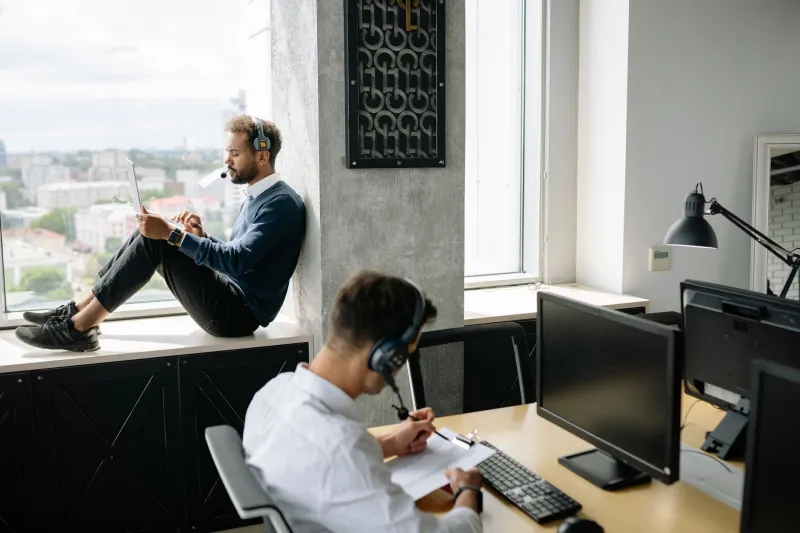
Technology equity is among the most telling. Does the organization invest equally in the experience of remote participants as it does in the in-room experience? Conference rooms with cameras positioned to capture only the presenter, poor audio systems, and digital whiteboards that are functionally unusable from a home office all signal that remote workers are second-class participants. Enterprises that prioritize technology equity — ensuring that a team member dialing in from Denver has the same functional experience as one sitting in the New York office — communicate that physical presence is not a prerequisite for inclusion.
Asynchronous infrastructure is equally revealing. Organizations that have built their workflows around real-time, in-person communication — where the hallway conversation still drives decisions — are structurally hostile to remote work regardless of what their policy documents say. Remote-first talent can identify these organizations quickly, often through the interview process itself.
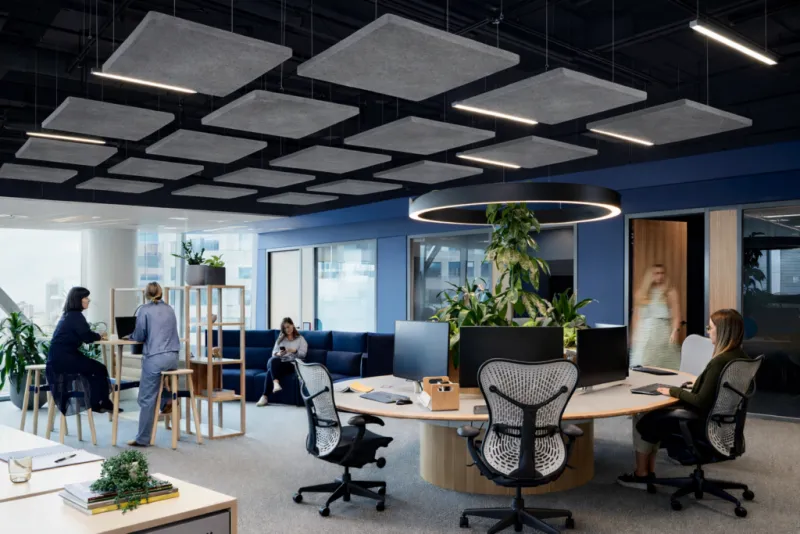
Space allocation philosophy also matters. Enterprises that dedicate the majority of their square footage to assigned seating arrangements are telling prospective employees something about their expectations. By contrast, organizations that have transitioned toward activity-based working models — with zones dedicated to focused individual work, informal collaboration, and formal meeting functions — demonstrate that they have genuinely rethought how work happens.
The Organizational Culture Signal
Perhaps the most consequential dimension of workspace design is what it communicates about organizational culture. Physical environments are not neutral containers for work. They are expressions of values, priorities, and assumptions about human behavior.
An office designed around surveillance — rows of visible desks, glass-walled manager offices positioned to maintain sightlines, minimal private space — communicates a management philosophy rooted in oversight rather than trust. Remote-first professionals, who have typically demonstrated sustained performance without that oversight, find such environments philosophically incompatible with how they understand effective work.
Conversely, enterprises that have designed their spaces around outcomes rather than attendance — creating environments that employees choose to visit because those environments offer something their home setup cannot, rather than requiring attendance through policy — signal a fundamentally different relationship between employer and employee. These organizations tend to attract professionals who are intrinsically motivated, self-directed, and comfortable with accountability. That is, precisely the talent profile most enterprises claim to want.
Practical Recalibration for Enterprise Leaders
Rethinking workspace design through the lens of talent attraction does not require a complete renovation cycle. It does require a deliberate audit of what your current environment communicates and whether that message aligns with the workforce you are trying to build.
Start by walking your space as a candidate would. What does the ratio of collaborative space to focused individual work space tell someone about your expectations? What does your technology infrastructure say about your commitment to location equity? Are there visible signals — assigned parking hierarchies, corner offices, attendance tracking displays — that contradict the flexibility narrative your recruiters are delivering?
From there, identify the highest-leverage interventions. In many cases, these are not structural. Reconfiguring an underutilized floor to create a genuine mix of work modalities, upgrading conferencing technology to support true remote parity, and establishing clear norms around asynchronous communication can collectively shift the signal your workspace sends without requiring a significant capital commitment.
Finally, consider how your workspace is represented externally. Recruitment materials, social media, and even the visual language of your careers page should reflect the environment you are actually building — not an idealized version of a past that no longer serves your talent strategy.
The Competitive Cost of Inertia
The enterprises that will struggle most in the next decade of talent competition are not those that have made the wrong decisions about workspace design. They are those that have made no decision at all — defaulting to legacy environments because change requires effort, investment, and a willingness to challenge assumptions that have governed corporate real estate for generations.
Remote-first talent is not asking organizations to abandon the office. They are asking for evidence that the office was designed with them in mind. That distinction is worth understanding, because the organizations that get it right are not just winning on aesthetics. They are winning on trust — and in the current labor market, trust is the most durable competitive advantage available.