From Gut Feeling to Ground Truth: How Occupancy Intelligence Is Reshaping Enterprise Real Estate Strategy
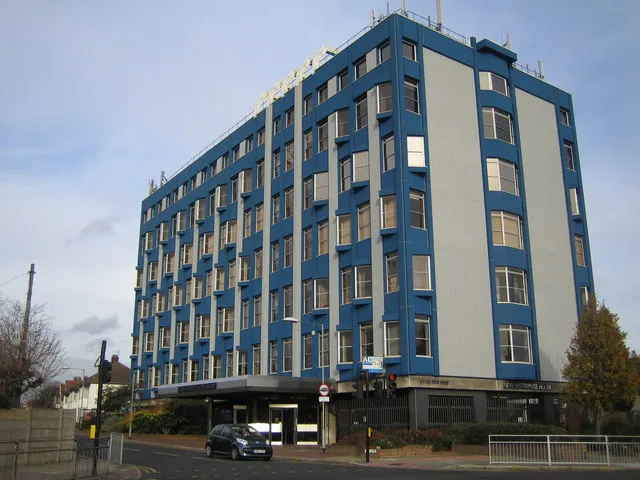
Photo: Nigel Cox, CC BY-SA 2.0, via Wikimedia Commons
A $750 Billion Blind Spot
Corporate real estate represents the second-largest line item on most enterprise balance sheets, trailing only labor costs. In the United States alone, commercial office space accounts for hundreds of billions of dollars in annual lease obligations. Yet until recently, the decisions governing how that space was allocated, configured, and retained were driven primarily by intuition, historical precedent, and the loudest voices in the room.
That is beginning to change — rapidly. A new category of workplace intelligence technology is enabling enterprises to observe, measure, and respond to how their physical environments are actually being used, rather than how they are assumed to be used. The gap between those two realities, it turns out, is frequently enormous.
JLL's 2023 Global Real Estate Technology Survey found that the majority of corporate occupiers were utilizing less than 60 percent of their leased space on any given day — even before accounting for the continued effects of hybrid work patterns. For a 200,000-square-foot lease in a tier-one US market, that utilization gap can represent millions of dollars in annual overhead with zero corresponding productivity return.
The Technology Stack Powering Spatial Intelligence
The term "space analytics" has evolved considerably from its early incarnations as simple badge-swipe reports. Today's enterprise-grade platforms integrate multiple data streams into a coherent operational picture.
Passive occupancy sensing — deployed through ceiling-mounted infrared sensors, ultrasonic detectors, or computer-vision systems — captures real-time presence data across an entire floor plate without requiring employee action or identification. These systems can distinguish between a room that is booked and a room that is actually occupied, a distinction that has proven to be one of the most consequential metrics in modern facilities management.
Wi-Fi and Bluetooth positioning supplements sensor data with movement patterns, enabling heat-map visualizations that reveal traffic flows, dwell times, and spatial preferences at a granular level. Facilities and real estate teams can observe, for instance, that a cluster of collaboration rooms on the north side of a floor goes largely unused while a smaller set of informal lounge areas consistently operates at capacity — intelligence that directly informs both near-term furniture decisions and longer-term lease negotiations.
Calendar and booking system integration closes the loop between intended and actual use, surfacing patterns of ghost bookings, chronic under-utilization of specific room types, and mismatches between the space inventory an organization has and the space its workforce demonstrably needs.
People analytics platforms bring the human dimension into the analysis. When anonymized mobility data, collaboration network mapping, and employee engagement metrics are layered over spatial utilization data, organizations gain a multidimensional view of how physical environment correlates with team performance, connection, and retention.
From Reporting to Decision-Making: The Implementation Gap
The technology itself is increasingly mature. The more significant challenge facing enterprise organizations is translating data outputs into actionable decisions — and navigating the organizational complexity that surrounds them.
Real estate, facilities, IT, HR, and finance each have legitimate stakes in workspace data, but they have historically operated in separate silos with different metrics, different planning cycles, and different definitions of success. Space analytics platforms are most powerful when they serve as a shared source of truth across those functions — but achieving that integration requires deliberate governance, not just software deployment.
Several large US enterprises have addressed this by establishing cross-functional Workplace Intelligence teams — small, dedicated groups with representatives from each stakeholder domain — charged with translating data into portfolio recommendations on a quarterly basis. This model has proven more effective than deploying analytics tools within a single department, where insights tend to be filtered through a single function's priorities.
Data privacy is a parallel consideration that cannot be treated as an afterthought. Employees have legitimate concerns about workplace monitoring, and organizations that fail to address those concerns transparently risk eroding the trust that underpins engagement and retention. Best-practice implementations are explicit about what data is collected, how it is anonymized, and who has access to it — communicated through formal policy documentation and active manager communication rather than buried in an intranet update.
Case Evidence: What the Numbers Are Showing
The business case for spatial intelligence investment is becoming well-documented, even if specific organizations are often reluctant to publish proprietary findings.
A major US financial services firm that implemented a portfolio-wide occupancy sensing program across its domestic office footprint identified that approximately 35 percent of its dedicated desk inventory was consistently unoccupied during core business hours — even on its highest-attendance days. Acting on that data, the organization renegotiated two lease renewals at significantly reduced square footage, redirected a portion of the savings into higher-quality collaborative space, and reported no measurable decline in employee satisfaction scores.
A technology company in the Pacific Northwest used heat-mapping data to discover that a newly built floor configured for open collaboration was generating disproportionate noise complaints and that employees were systematically migrating to older, partially enclosed sections of the building for focused work. The data prompted a targeted retrofit — acoustic panels, the addition of phone booths, and a reconfiguration of furniture zones — that cost a fraction of what a full redesign would have required.
In both cases, the value of the analytics investment was not the data itself. It was the organizational confidence to act on findings that contradicted existing assumptions.
The Competitive Dimension
Real estate has long been viewed as a cost-management function. The organizations at the forefront of spatial intelligence are repositioning it as a strategic capability — one with direct implications for talent acquisition, workforce productivity, and financial agility.
In a labor market where knowledge workers retain significant leverage over their employment choices, the physical environment has become a tangible expression of how an organization values its people. Enterprises that can demonstrate — with data — that they are continuously optimizing their spaces to support the actual work patterns of their workforce are making a meaningful statement about operational seriousness.
Equally, as lease terms shorten and portfolio flexibility becomes a competitive priority, the organizations with the most granular understanding of their utilization patterns are the ones best positioned to make rapid, evidence-based decisions when market conditions shift.
Space analytics, in this context, is not a back-office efficiency tool. It is a front-office strategic asset — and the enterprises treating it as such are building a durable advantage that will compound as the workplace continues to evolve.