Deferred No More: Why Postponed Facility Upgrades Are Quietly Becoming Enterprise Balance Sheet Risks
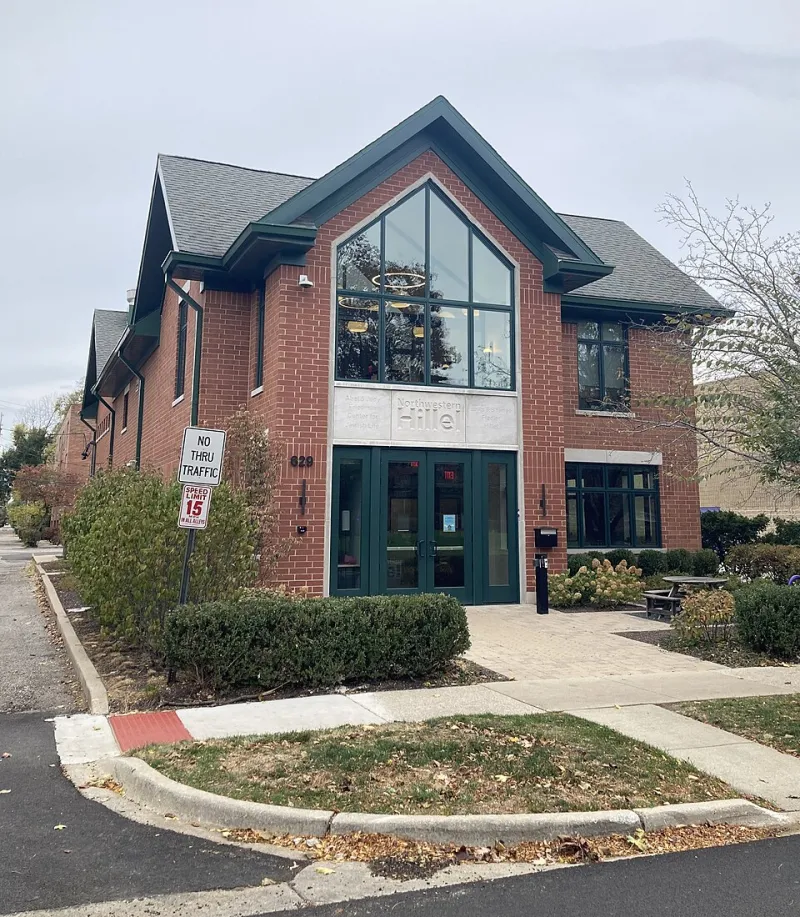
Photo: Nick Number, CC BY 4.0, via Wikimedia Commons
The Bill That Never Goes Away
There is a particular kind of financial risk that enterprises rarely discuss in quarterly reviews: the liability that accumulates not from spending too much, but from spending too little. Deferred workspace maintenance—the deliberate postponement of facility upgrades, infrastructure repairs, and compliance-driven improvements—has become one of the most underappreciated line items on the corporate balance sheet.
For years, cutting maintenance budgets has been a go-to lever for finance teams navigating tight fiscal quarters. The logic appears sound on the surface: delay a HVAC overhaul, push back a roof inspection, defer an electrical panel upgrade, and the savings appear immediately in this year's operating statement. What that logic obscures, however, is that the cost does not disappear. It compounds.
According to facility management research, deferred maintenance in commercial real estate grows at an estimated rate of four to five percent annually when left unaddressed. What began as a $200,000 postponed mechanical upgrade in 2020 may now represent a $250,000 repair requirement—plus the added exposure of regulatory non-compliance and potential operational disruption.
From Operating Expense to Liability: A Shift in Framing
The traditional enterprise view treats facility maintenance as a straightforward operating expense—something to be minimized when revenue pressures mount. This framing is increasingly untenable in today's regulatory and risk environment.
The more accurate categorization, from a financial risk standpoint, is that deferred maintenance constitutes a contingent liability. It represents a future obligation that is certain to materialize, uncertain only in its timing and magnitude. When CFOs begin accounting for deferred maintenance through this lens, the calculus changes considerably.
Consider three categories of exposure that accumulate when maintenance is systematically postponed:
Code Compliance Risk: Building codes in the United States are regularly updated by jurisdictions at the local, state, and federal level. Systems installed under older standards—electrical, fire suppression, accessibility features, HVAC efficiency requirements—may fall out of compliance as codes evolve. Enterprises occupying aging facilities without proactive upgrade programs face potential fines, mandatory remediation orders, and in extreme cases, forced occupancy restrictions that disrupt operations entirely.
Catastrophic System Failure: Reactive maintenance—responding to failures after they occur—consistently costs more than proactive intervention. Industry benchmarks suggest reactive repairs can run three to five times the cost of planned maintenance for equivalent system components. A chiller unit that could have been serviced for $15,000 may require full replacement at $90,000 when it fails unexpectedly during peak summer operations. The downstream costs—temporary cooling solutions, lost productivity, potential equipment damage from thermal events—compound the direct repair expenditure significantly.
Liability and Litigation Exposure: Deteriorating physical environments create conditions that expose enterprises to workers' compensation claims, tenant disputes, and personal injury litigation. Slip-and-fall incidents attributable to worn flooring, respiratory incidents linked to degraded air handling systems, and fire incidents connected to outdated electrical infrastructure have all resulted in significant legal settlements in recent years. These outcomes are difficult to predict with precision but are entirely foreseeable as systemic risks.
Quantifying What Finance Teams Prefer Not to See
One of the practical challenges in addressing workspace debt is measurement. Unlike accounts payable or debt service obligations, deferred maintenance does not appear as a discrete line item in standard financial reporting. It lives in the gap between what has been inspected and what has been addressed—a gap that many organizations have allowed to widen for years.
A rigorous facility condition assessment (FCA) is the foundational tool for quantifying this exposure. Conducted by qualified engineers and facility consultants, an FCA evaluates the current condition of all building systems—structural, mechanical, electrical, plumbing, envelope, and life safety—against their expected useful life and current code requirements. The output is a prioritized list of deferred needs, typically expressed as a Facility Condition Index (FCI), which allows enterprises to compare their maintenance backlog against the replacement value of their portfolio.
For enterprise portfolios spanning multiple locations, aggregating FCA data provides a true picture of balance sheet exposure. Organizations that have undergone this process frequently discover that their actual deferred maintenance liability is two to three times larger than internal estimates suggested. That discrepancy is not the result of negligence—it is the predictable outcome of measuring maintenance needs through budget allocation rather than physical condition assessment.
When the Math Favors Investment Over Deferral
The inflection point—when continued deferral becomes demonstrably more expensive than proactive investment—varies by system type and organizational context. However, several indicators reliably signal that an enterprise has crossed that threshold:
- System age exceeding design life by more than 20 percent: Equipment operating beyond its intended useful life carries exponentially higher failure probability and typically operates at degraded efficiency, increasing utility costs.
- Repair-to-replacement cost ratio approaching 50 percent: When the cost of repairing a failing system exceeds half the cost of full replacement, the financial case for replacement typically dominates on a net present value basis.
- Recurring incidents affecting the same system: Multiple repair events for the same component within a 24-month window are a reliable indicator that the system has entered terminal decline and that further reactive spending will not resolve the underlying condition.
Forward-thinking CFOs are incorporating these triggers into their capital planning frameworks, establishing clear thresholds that convert deferred maintenance items from operating budget considerations into capital expenditure priorities.
Reframing Maintenance as Risk Mitigation
Perhaps the most significant shift in enterprise workspace strategy is the growing recognition that facility investment is not a cost center—it is a risk management function. The organizations making the most effective capital allocation decisions are those that have integrated facility condition data into their enterprise risk management frameworks alongside cybersecurity, supply chain resilience, and business continuity planning.
This reframing has practical budget implications. When maintenance investment is positioned as risk mitigation rather than operating expense, it competes for funding against other risk management priorities rather than against discretionary line items. That competitive context is considerably more favorable, and it tends to produce more consistent funding over time.
Some enterprises have gone further, establishing dedicated workspace risk reserves—structured financial instruments that set aside capital annually against future facility obligations, much as organizations reserve for legal contingencies or insurance deductibles. This approach smooths the capital requirement over time and prevents the sudden, budget-disrupting expenditures that characterize reactive facility management.
The Strategic Imperative
Deferred workspace maintenance is not a facilities management problem. It is a financial strategy problem—one that originates in short-term budget optimization and materializes as long-term enterprise liability. The organizations that recognize this distinction earliest will be best positioned to manage their physical workspace portfolios as the strategic assets they are, rather than the cost burdens they are so often treated as.
The workspace debt crisis is real, it is measurable, and it is growing. The question for enterprise leadership is not whether the bill will come due—it will. The question is whether your organization will be prepared to pay it on its own terms, or on the terms dictated by a failed system, a compliance order, or a courthouse.